
Photo credit: Gerry Feehan
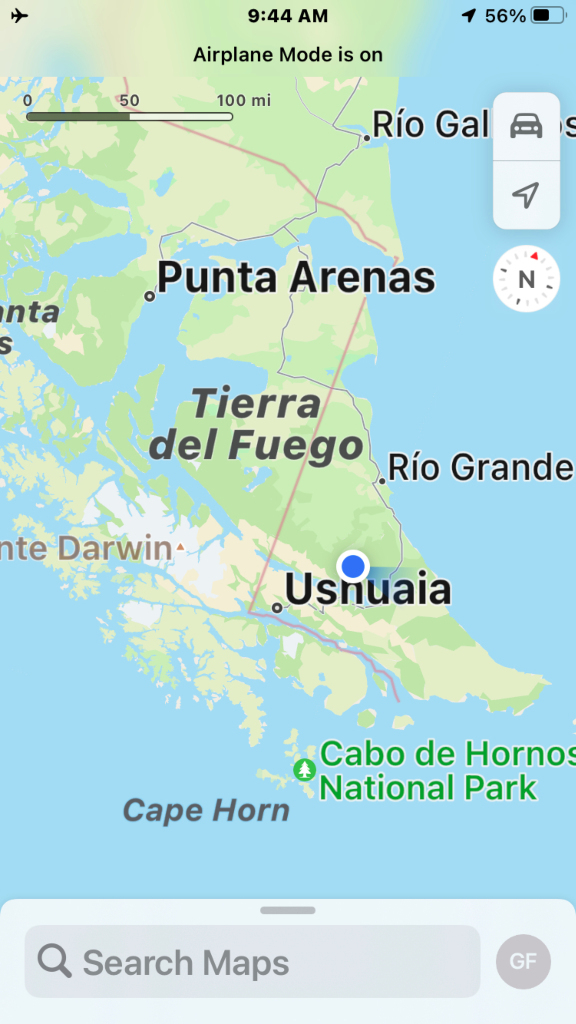
Ushuaia
November 26, 4:03pm. Ushuaia, Argentina. Honking horns, barking dogs and ecstatic human cries roused me from a peaceful siesta. After a long morning exploring the heart of the city—followed by a hearty lunch of red meat and vino tinto—I was sound asleep. I rose groggily and peered through the curtains onto the chaotic scene below. The World Cup was afoot and Argentina had just won a crucial match against Mexico. After a devastating opening-round loss to underdog Saudi Arabia, the entire nation had rebounded from inconsolable grief to the heights of mount euphoria.
Our original itinerary called for a visit to the old Ushuaia prison that afternoon—but we opted to barhop instead. “After all,” I thought, accepting a cold cerveza from a buxom celebrant, “the jail will still be there tomorrow.”
Ushuaia is the world’s southernmost city. Canada’s fall is Austral spring. Thus, at 5:28am Sunday morning, a warm November sun was already stirring the curtains of room 417 in Hotel Tierra del Fuego. And still the street din continued. I rose, closed the window, pulled a pillow over my head and struggled back to sleep. Our day on the Beagle Channel was hours away. At 8am when the alarm sounded the streets were finally quiet.
The Ushuaia Explorer left port at 9:30am. Streamers of purple kelp pointed seaward, indicating an ebbing tide. Renowned for nasty weather, relentless currents and winds from hell, the Beagle Channel is a mariner’s nightmare. Four-centuries of shipwrecks attest to the unforgiving nature of the frigid strait. Yet we encountered none of this—just pure calm, glassy waters and a perfect sunny day.
I stood atop the deck chatting merrily with visitors from around the world, snapping photos and enjoying the scenery as the ship wove through the Alicia Archipelago. We floated by an uninhabited island barren of flora, painted white and smelling of ammonia. “It’s guano,” a local explained, “so nothing grows there. The birds used it for a while… and then moved on.” (Perhaps it is not only we humans that mistreat the planet?) At a nearby island curious penguins watched us watching them. Magellanic cormorants clung to the cliff face, chins up. Barking sea lions battled to gain a flipper-hold on the rocky shore.
My ever-inquisitive buddy Joe struck up conversation with an underpaid surgeon from Buenos Aires while I ducked under the shade of a Bimini and eavesdropped from the sidelines. “What’s with the Argentine peso problem? And why’s the official exchange rate for dollars so much lower than the street rate?” The poor doctor made a valiant effort to explain his country’s pervasive insoluble currency woes but eventually just shrugged his shoulders. The conversation shifted to a cheerier topic: the World Cup. The physician’s 15-year-old son, proudly sporting the white and blue of la Albiceleste, stepped in. “It’s simple,” he said. “Inflation in Argentina is entirely out of control. People pay a premium for US dollars today so they can buy a loaf of bread tomorrow. We have a saying, ‘The mattresses of Argentina are stuffed, but not with feathers.’” If that kid were running for office, he’d have my vote.
I poked my sunburned nose back into the sun just as the Explorer peeled around Les Eclaireurs Lighthouse. The boat nearly toppled over with the rush of tourists stampeding starboard, Iphones outstretched, each seeking a photographic memory of the iconic edifice. This brick-built lighthouse has guarded the entrance to Ushuaia for over 100 years. A slight headwind cooled our trip back to port and felt good on my schnoz, which was beginning to peel like a well-worn soccer ball. It was a marvellous morning.
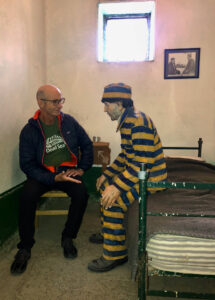
Fittingly, Ushuaia is home to El Fin Del Mondo prison. A century ago the worst of the worst ended up in this jail at ‘The End Of The World’. Murderers, political prisoners, navy deserters and hapless indigenous Yamana people were confined to small damp cells. From overhead the old prison looks like a four-legged spider or an alien spaceship. It is now a museum and pretty corny—as touristy things usually are. But the granite block cells are still there, cold and real, so it’s not difficult to imagine how harsh life was here for the disenfranchised of the early 1900’s.
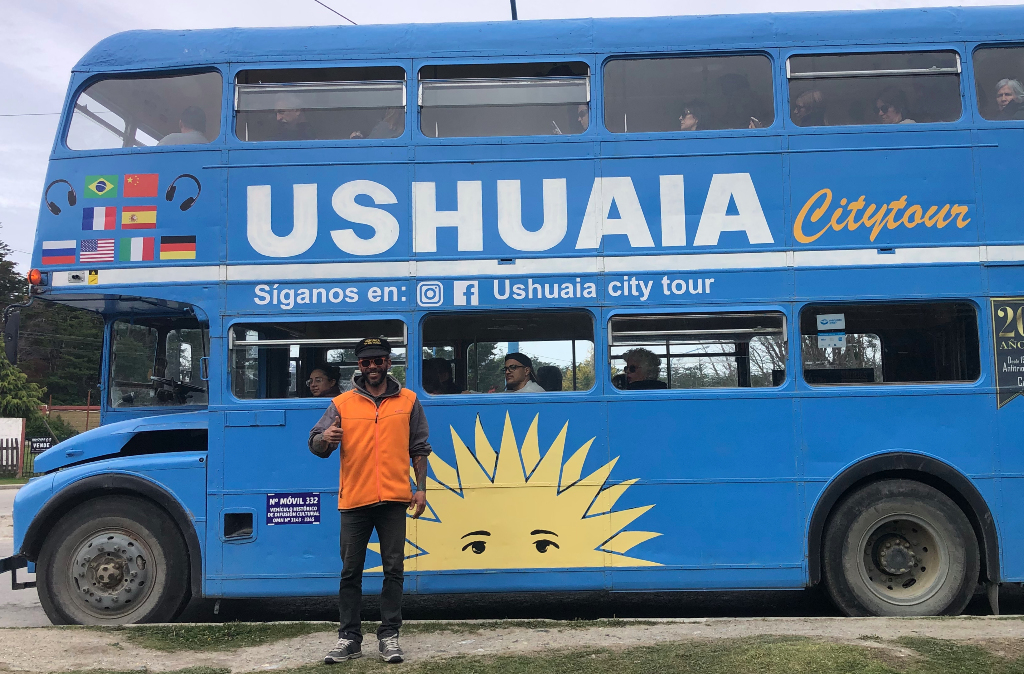
Escaping the prison, we enjoyed a city bus tour. It too was rather corny (Ushuaia is not very big) but the commentary was informative, the driver groovy, the ocean views great and every greenspace was packed with kids playing futbal—dreaming of becoming the next Lionel Messi.
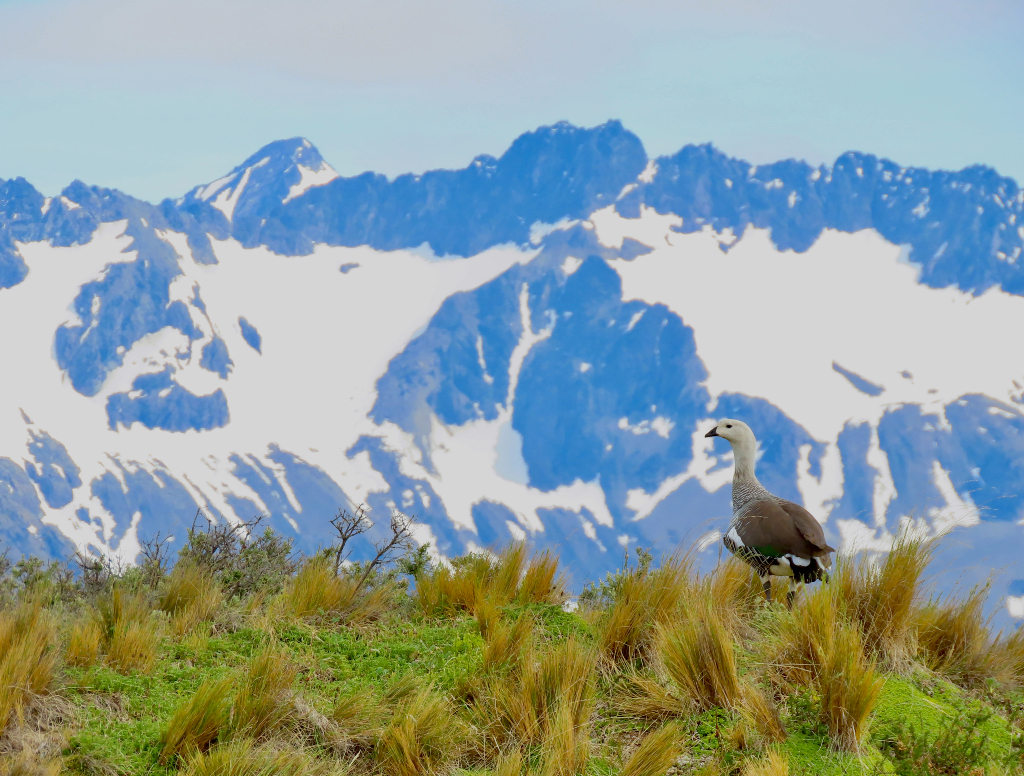
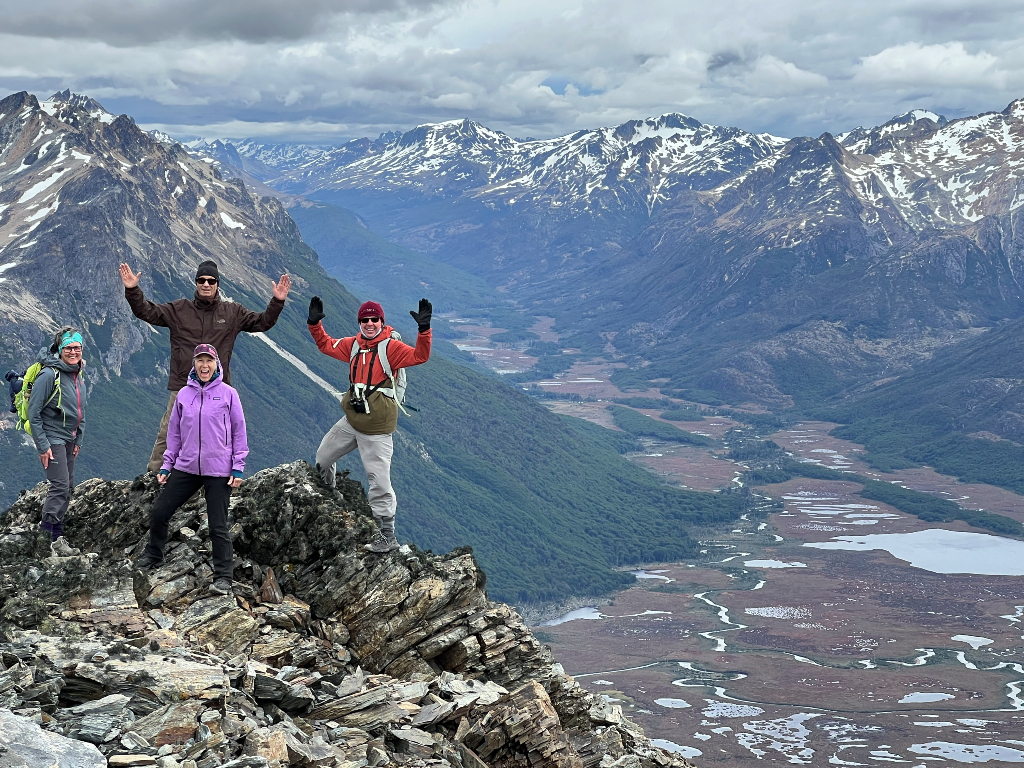
Tierra del Fuego has no ants. Honestly. I jokingly asked Lolo our mountain guide if she would like me to bring some from Canada on our next visit. “No gracias,” she answered, “we already have your big rodents.” She pointed across the valley to the local ski hill. “That is Cerro Castor—Beaver Mountain.” Castor canadensis was introduced to Tierra del Fuego in the 1940’s to encourage a fur industry. The pelt business failed but the rodents flourished. They have become a tremendous nuisance. Apparently Canada’s national animal has a tooth for felling slow-growing majestic old trees. And the barrancas they dam tend to be in steep inaccessible terrain, clogging waterways and precariously threatening the folk downstream.
After a difficult but gradual ascent we arrived at a ridge overlooking Tierra del Fuego National Park. Lolo stopped, removed her pack and sat. Lunchtime. While we munched on fajitas con pollo and admired the Beagle Strait far below, Lolo offered her reflections on life at the end of the world. She was informative, funny—and also an aspiring student of astrology. “I’ll guess your sign Gerry,” she said confidently. After 7 misses l disclosed I was a Sagittarius. “I knew it,” she beamed, “you Canadians are so easy.” I accepted this astrological accolade with only a slight flinch. On the winding descent we drank freely from the clear, fresh glacial streams until we reached tree line, where our castor brethren—and beaver fever—reign.
Back in town, the bus dropped us in a small square a few blocks from the hotel. A group of men were preparing a thermos of maté, ritually stirring the green froth. The odor was reminiscent of burning mesquite. One old man drank deeply then, sharing a single metal straw, passed the yerba round the table. Argentinians are crazy about two things: maté and futbal. With each swallow the men’s faces signalled calm pleasure, the concoction part tea, part intoxicant. Personally, I disliked the stuff. Didn’t care for the bitter flavour… and didn’t get a buzz. Between serene sips, the men shouted encouragement to a group of children heading a soccer ball across the street.
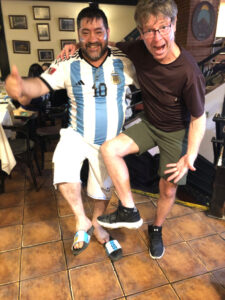
On our last night in Ushuaia the city was again on tenterhooks. Argentina vs Poland. We watched the game at the aptly-named Cafe Bananas, where the fans were going, well… nuts. Following the game and another triumph by La Albiceleste the city was again in a euphoric uproar. (You may recall the Argentine side went on to win the 2022 World Cup sending the entire nation into a very Messi delirium).
After the game we zig-zagged down to El Viejo Marino for a centolla feast—fresh whole king crab served with a vat of clarified butter—pushed back our chairs and admired the setting sun, still shining valiantly 16 hours after it had nudged our hotel-room curtains. Across the bay an Argentine navy vessel faded from gun-metal gray to black.
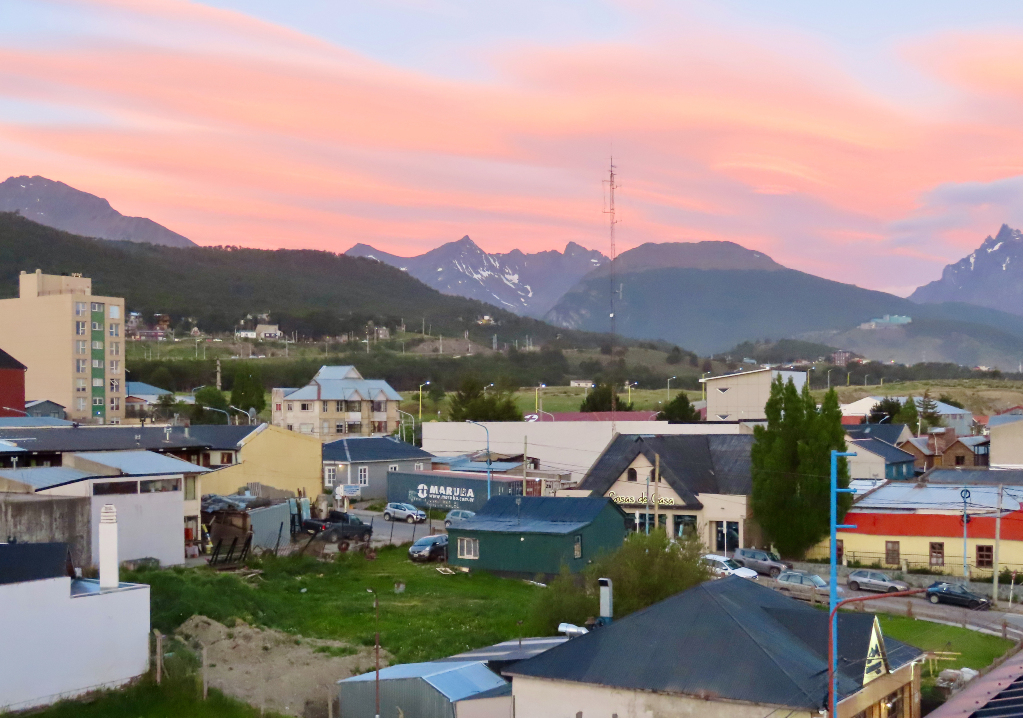
At 9:21pm earth’s hard-working orb disappeared quietly into the Beagle Channel. After three festive days at the end of the world, I too was ready for bed.
Gerry
